


Your cart is empty Continue Shopping
Offshore Communications for Solo Sailors on an Atlantic Crossing

When you sail across the Atlantic alone, communication is as vital as food, water, and sleep. You don’t have crew to share the load, so reliable systems for weather, navigation, and distress calls keep you safe and connected. This article explains the main communication options available, how solo sailors use them, and what to prioritize when preparing for your first ocean passage.
Why Communication Matters
On land, most people take constant connection for granted. At sea, you are your own safety net. The right tools give you:
- Weather forecasts: Updated files keep you on top of systems forming mid-ocean.
- Collision avoidance: AIS lets ships see you, and you see them.
- Family updates: Short daily check-ins reassure those waiting ashore.
- Distress alerts: EPIRBs and PLBs trigger rescue if the worst happens.
Without these, a solo sailor is isolated, making decisions with incomplete information.
The Core Systems Every Solo Sailor Needs
1. EPIRB (Emergency Position Indicating Radio Beacon)
This is non-negotiable. An EPIRB sends your GPS position via satellite to rescue services when activated.
- Keep it mounted where you can reach it quickly.
- Register it with your national authority.
- Test it before departure.
2. PLB (Personal Locator Beacon)
Wear a PLB on your lifejacket. If you fall overboard while tethered or in a life raft, it acts as your backup distress beacon.
3. AIS (Automatic Identification System)
AIS transmits your vessel’s identity and position to other ships and shows theirs to you.
- A transceiver (not just receiver) is recommended so you can be seen by commercial traffic.
- Essential when sleeping in short bursts, since ships can approach fast.
4. VHF Radio
Still essential for close-range communication.
- Fixed VHF for normal operations.
- Waterproof handheld as backup in case of power loss or abandon-ship.
Long-Range Communication Options
Satellite Messengers
Devices like Garmin InReach and SPOT trackers allow text messages, email, and position reports.
- Compact and power efficient.
- Useful for short daily updates to family.
- Limited for large files like GRIB weather data.
Satellite Phones
Iridium, Inmarsat, and Thuraya provide global voice and data service.
- Voice calls with shore support or doctors.
- Data connection for small files like weather GRIBs.
- Higher cost but versatile.
Many solo sailors rent an Iridium handset for the crossing.
SSB (Single Sideband) Radio
Less common with newer sailors but still valued.
- Free once installed, no ongoing subscription.
- Access to weather nets and voice networks of sailors crossing at the same time.
- Larger installation and antenna required.
SSB gives you human contact at sea, which matters on a solo crossing.
Weather Access
Reliable weather forecasting is what keeps solo sailors out of danger.
- GRIB files: Downloadable through sat phone or services like Saildocs and PredictWind.
- Routing services: Professional routers can send daily advice via email or sat phone.
- Weather nets: On SSB, you can listen to other sailors reporting conditions.
Power Considerations
Communications equipment is only useful if powered. Solo sailors need redundancy.
- Solar panels and wind generators reduce engine run-time.
- Carry backup batteries and power banks for handheld devices.
- Check consumption of radar and sat systems to avoid draining main batteries.
A Practical Setup for a First Solo Crossing
Most first-time solo sailors combine:
- EPIRB and PLB for safety
- AIS transceiver for collision avoidance
- Handheld VHF as backup
- Sat messenger for daily texts and position reports
- Sat phone for weather and emergency calls
This covers all the essentials without adding unnecessary complexity.
Emergency Planning
Have a written plan for how each device will be used in an emergency.
- If abandoning ship: Take handheld VHF, PLB, sat phone, and grab bag.
- If autopilot fails and you need help: Use sat phone to contact shore support.
- If injured: Call a telemedicine provider via sat phone.
- If taking on water: Activate EPIRB once the situation becomes unmanageable.
Write this plan down, laminate it, and keep it where you can reach it.
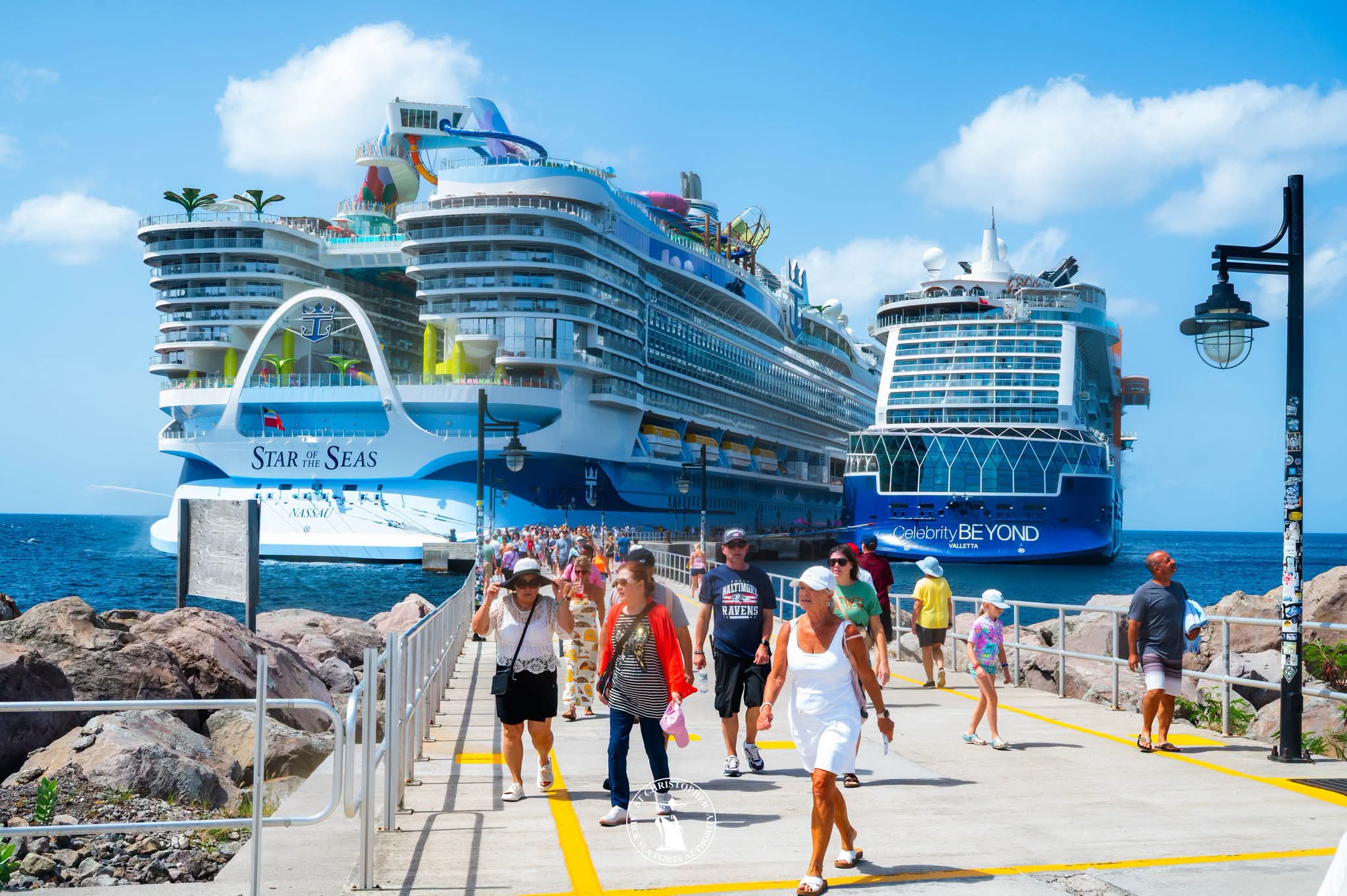
Why St. Kitts Is a Smart Stop After Crossing
After weeks of relying on sat messengers and GRIB downloads, you’ll want a marina where communication is simple again. Port Zante Marina in Basseterre provides:
- On-site Customs and Immigration for quick clearance
- Local mobile providers (Digicel, Flow) within walking distance for SIM cards and data
- Access to banks, cafes, and internet to reconnect with family properly
- Secure berths with power to recharge and reset your equipment
- Local technicians who can check and service communication gear
For solo sailors, this makes Port Zante a reassuring first landfall.
Key Takeaways
- EPIRB, PLB, AIS, and VHF are essential safety tools.
- Satellite messengers and sat phones keep you connected and informed.
- Power redundancy ensures your systems work for the whole passage.
- A written emergency plan turns panic into action.
- Make landfall in a marina with services and connectivity – Port Zante in St. Kitts delivers both.