

Your cart is empty Continue Shopping
Sailing from St Martin to St Kitts | Route, Conditions and Arrival Planning

The passage from St Martin to St Kitts is a well-traveled leg in the northern Leeward Islands. It connects one of the busiest yachting hubs in the Caribbean to a structured port of entry with marina access in Basseterre.
Although the distance is manageable, the open water between islands exposes vessels to full trade wind and Atlantic swell conditions.
This guide outlines realistic sailing distance, wind behavior, sea state, routing strategy, and entry planning into St Kitts.
Passage Summary
- Distance: Approximately 45 to 50 nautical miles
- Typical duration: 6 to 10 hours depending on wind strength
- Prevailing wind: East to east-northeast trade winds
- Exposure: Open Atlantic corridor with wind acceleration
- Primary port of entry: Basseterre, St Kitts
Distance and Expected Sailing Time
The sailing distance from Simpson Bay Lagoon or Marigot Bay in St Martin to Basseterre, St Kitts typically ranges between 45 and 50 nautical miles depending on exact departure point.
Under steady trade winds of 15 to 20 knots, most cruising yachts complete the passage in 6 to 8 hours.
In stronger trade cycles of 20 to 25 knots, speeds may increase but sea state becomes the dominant factor affecting comfort and crew fatigue.
Many skippers depart early morning to allow for daylight arrival and clearance in St Kitts.
Prevailing Wind and Seasonal Patterns
The northern Leeward Islands are governed by consistent easterly trade winds for much of the year.
December through April
Stronger, more consistent trades. Wind frequently 18 to 25 knots. Open water can feel significantly stronger than conditions inside Simpson Bay.
May through August
Generally lighter winds. More comfortable passages with occasional localized squalls.
September through November
Reduced traffic volume. Weather systems must be monitored carefully during hurricane season.
Between St Martin and St Kitts, the absence of significant landmass in the corridor allows wind to build cleanly across open water. Gusts are common in the acceleration zones.
Sea State in the St Martin to St Kitts Gap
This passage is fully exposed to Atlantic swell.
Typical conditions include:
- Combined wind waves and swell between 1 and 2.5 meters
- Shorter wave period in stronger trade cycles
- Occasional cross swell depending on offshore weather systems
In sustained 20 knot trades, seas may become short and steep. Reefing early improves motion comfort and reduces strain on rig and crew.
Course Strategy
Direct Rhumb Line
A direct course works efficiently when trades are moderate and seas manageable. This minimizes distance and travel time.
Shaped Approach
Some skippers choose a slightly higher initial heading to reduce pounding, then bear away toward St Kitts once closer to land and in moderated seas.
Comfort management is key. This is not a technically difficult leg, but fatigue accumulates quickly in steep seas.
Landfall and Approach to St Kitts
As St Kitts becomes visible, you will typically begin entering the island’s wind shadow. Sea state generally moderates closer to the west coast.
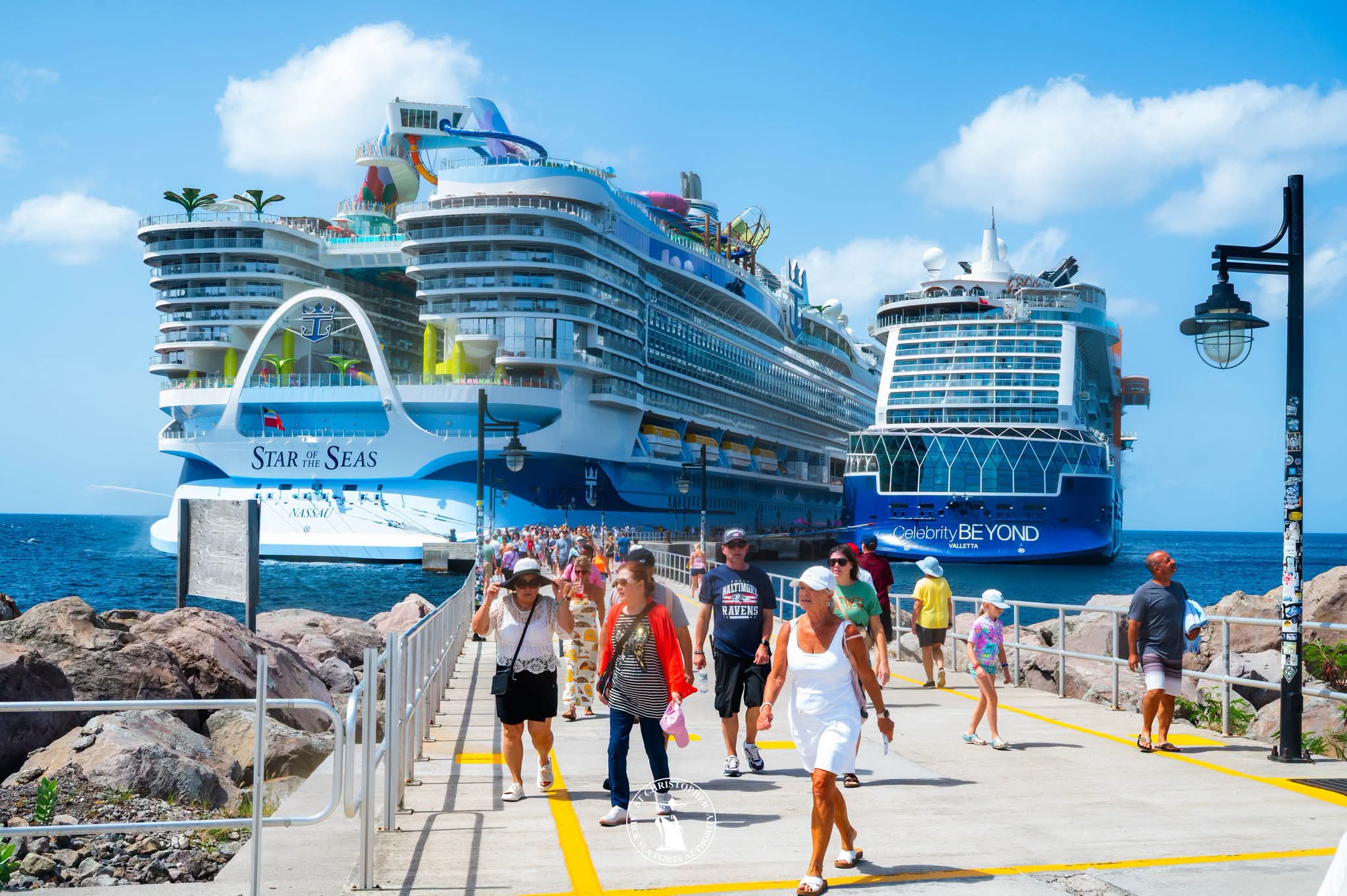
Approach Basseterre cautiously, especially on active cruise days. Cruise traffic increases harbor activity and vessel movement near the port.
Plan arrival during daylight whenever possible.
Clearing into St Kitts
Basseterre is an official port of entry for yachts.
On arrival, standard clearance procedures apply. Prepare:
- Vessel registration documents
- Passports for all crew
- Crew list
- Clearance papers from St Martin
Before departure from St Martin, review the full Clearing into St Kitts by Yacht guide to ensure documentation is complete and process understood.
Port Zante Marina Considerations
Port Zante Marina provides docking access within walking distance of Basseterre’s commercial center.
Before departure from St Martin:
- Confirm vessel length and draft suitability
- Review marina specifications
- Prepare estimated time of arrival
- Coordinate with marina staff if docking
Providing advance notice improves berth planning, particularly during peak cruise season. The Port Zante Marina can be contacted via email at [email protected] or you can click here to submit a booking request.
Why This Route Is Important
St Martin functions as a major provisioning, charter, and maintenance hub. St Kitts provides structured clearance, city access, and marina facilities in a compact and accessible layout.
For many yachts cruising southbound through the Leewards, this leg represents the transition toward Nevis, Guadeloupe, and Martinique.
Compared to the Sailing from Antigua to St Kitts passage, the St Martin leg is shorter but equally exposed to trade wind acceleration.
Strategic planning improves efficiency and reduces arrival stress.
Frequently Asked Questions
How far is St Martin from St Kitts by sailboat?
The sailing distance is approximately 45 to 50 nautical miles depending on departure point.
How long does it take to sail from St Martin to St Kitts?
Most cruising yachts complete the passage in 6 to 10 hours depending on wind strength and sea state.
What are the winds like between St Martin and St Kitts?
Prevailing easterly trade winds dominate. Wind acceleration in open water often produces stronger conditions offshore than inside protected bays.
Is this passage difficult?
The route is straightforward in navigation but can be physically demanding in strong trade winds and steep seas.
Arrival Planning Checklist
Before departure:
- Review marine forecast and gust range
- Prepare conservative reefing plan
- Confirm daylight arrival window
- Review clearance documentation
- Confirm marina coordination if required
This leg is shorter than the Antigua route but equally exposed to trade wind acceleration. Proper preparation ensures a controlled and efficient arrival into St Kitts.