

Your cart is empty Continue Shopping
Sailing from Guadeloupe to St Kitts | Route, Conditions and Arrival Planning

The passage from Guadeloupe to St Kitts is a common northbound leg for yachts cruising the Eastern Caribbean. Departures are most often made from Deshaies on Guadeloupe’s northwest coast or from Les Saintes just south of the main island.
This leg involves open Atlantic exposure and consistent trade wind conditions. Proper timing and conservative sail planning are important for a controlled arrival into Basseterre.
Passage Summary
- Distance from Deshaies to Basseterre: Approximately 45 to 50 nautical miles
- Distance from Les Saintes to Basseterre: Approximately 60 to 65 nautical miles
- Typical duration: 7 to 12 hours depending on wind strength
- Prevailing wind: East to east-northeast trade winds
- Exposure: Open Atlantic with acceleration zones between islands
- Primary port of entry: Basseterre, St Kitts
Distance and Sailing Time
From Deshaies, Guadeloupe’s northwest anchorage, the passage to Basseterre measures roughly 45 to 50 nautical miles depending on landfall angle.
Under steady trade winds of 15 to 20 knots, most cruising yachts complete this leg in 7 to 9 hours.
From Les Saintes, the distance increases to approximately 60 to 65 nautical miles. Passage time typically ranges from 9 to 12 hours depending on sea state and sail configuration.
Morning departures are common to ensure daylight arrival into St Kitts.
Wind Patterns Between Guadeloupe and St Kitts
The Eastern Caribbean is dominated by easterly trade winds for most of the year.
December through April
Consistent and stronger trades. Sustained winds often range from 18 to 25 knots.
May through August
Moderate trades with more variable local patterns.
September through November
Weather monitoring is essential due to tropical systems.
Between Guadeloupe and St Kitts, the open corridor allows wind to build without significant land shelter. Expect wind strength offshore to exceed conditions observed in Deshaies anchorage.
Acceleration may occur particularly after clearing Guadeloupe’s lee.
Sea State and Offshore Exposure
This leg is fully exposed to Atlantic swell.
Typical sea conditions include:
- Wind waves between 1.5 and 2.5 meters in moderate trades
- Shorter wave periods in stronger wind cycles
- Cross swell when distant weather systems influence the region
In sustained 20+ knot trades, seas can become steep and closely spaced. Reefing early improves comfort and reduces fatigue on longer runs.
Unlike the shorter Nevis crossing, this passage requires more endurance management.
Course Strategy
Direct Rhumb Line from Deshaies
Most yachts departing Deshaies sail a direct north-northwest course toward Basseterre. This provides an efficient reach in easterly trades.
Shaped Approach
In stronger wind cycles, some skippers sail slightly higher during the initial offshore leg, then bear away toward St Kitts as sea state moderates closer to land.
From Les Saintes
Departure from Les Saintes involves clearing Guadeloupe’s southern tip before shaping a northbound course. This increases exposure time and total miles sailed.
Comfort and crew fatigue should guide sail plan decisions.
Landfall and Approach to St Kitts
St Kitts becomes visible at moderate range in clear conditions.
As you approach the west coast, you typically enter the island’s wind shadow. Sea state often reduces compared to open water conditions.
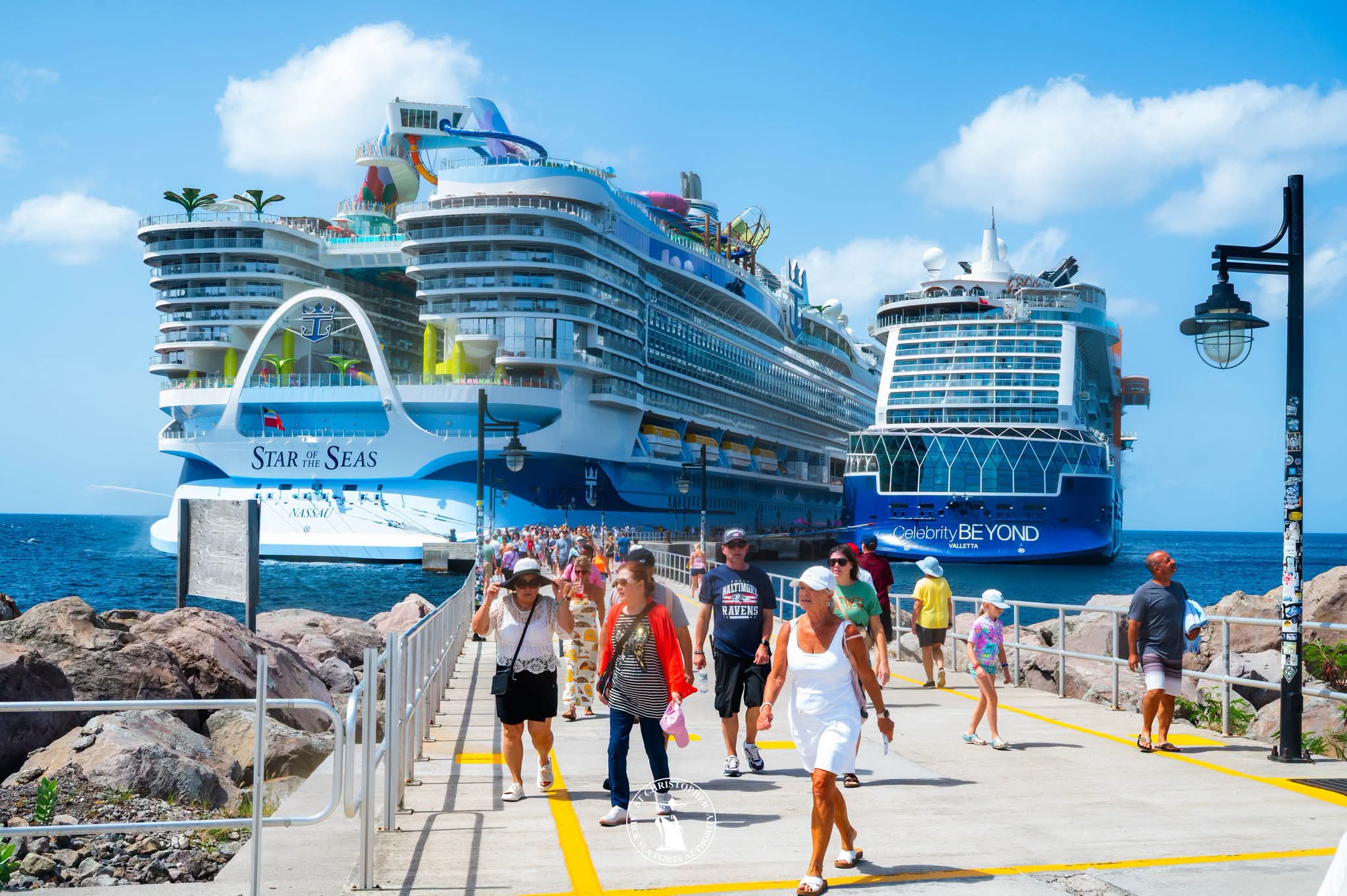
Basseterre is an active port that includes cruise ship operations. On heavy cruise days, increased harbor traffic should be expected.
Plan arrival during daylight to simplify approach and coordination.
Clearing into St Kitts
Basseterre is an official port of entry for yachts.
Prepare the following documentation before departure from Guadeloupe:
- Vessel registration
- Passports for all crew
- Crew list
- Clearance documentation from Guadeloupe
Review the full Clearing into St Kitts by Yacht guide before departure to ensure compliance with entry requirements.
Port Zante Marina Considerations
Port Zante Marina is located within Basseterre and provides docking access adjacent to the city center.
Before departure from Guadeloupe:
- Confirm berth suitability based on vessel length and draft
- Review Port Zante Marina specifications
- Prepare estimated time of arrival
- Coordinate with marina staff if docking
Advance communication improves efficiency, particularly during peak season. The Port Zante Marina can be contacted via email at [email protected] or you can click here to submit a booking request.
Why This Route Matters
Guadeloupe is a major cruising hub in the southern Leewards. Deshaies and Les Saintes serve as staging anchorages for yachts moving north.
For many vessels, this passage marks entry into the St Kitts and Nevis clearance zone and transition toward Nevis, Antigua, and St Martin.
Compared to the shorter Sailing from Nevis to St Kitts crossing, this route requires longer offshore exposure and greater weather awareness.
When linked with the Sailing from Antigua to St Kitts and Sailing from St Martin to St Kitts routes, this leg completes the northern and southern corridor surrounding St Kitts.
Frequently Asked Questions
How far is Guadeloupe from St Kitts by sailboat?
From Deshaies, the distance is approximately 45 to 50 nautical miles. From Les Saintes, the distance is approximately 60 to 65 nautical miles.
How long does it take to sail from Guadeloupe to St Kitts?
Most cruising yachts take between 7 and 12 hours depending on departure point and wind strength.
Is the passage rough?
Sea state can become steep in sustained trade winds due to full Atlantic exposure. Reefing early improves comfort and safety.
Is Basseterre a port of entry?
Yes. Basseterre is an official port of entry for yachts clearing into St Kitts and Nevis.
Arrival Planning Checklist
Before departure:
- Review updated marine forecast
- Confirm sustained wind strength and gust range
- Reef conservatively for open water
- Prepare clearance documentation
- Confirm marina coordination if docking
- Plan for daylight arrival
This leg extends the southern cruising corridor into St Kitts. Proper planning ensures an efficient and controlled arrival.